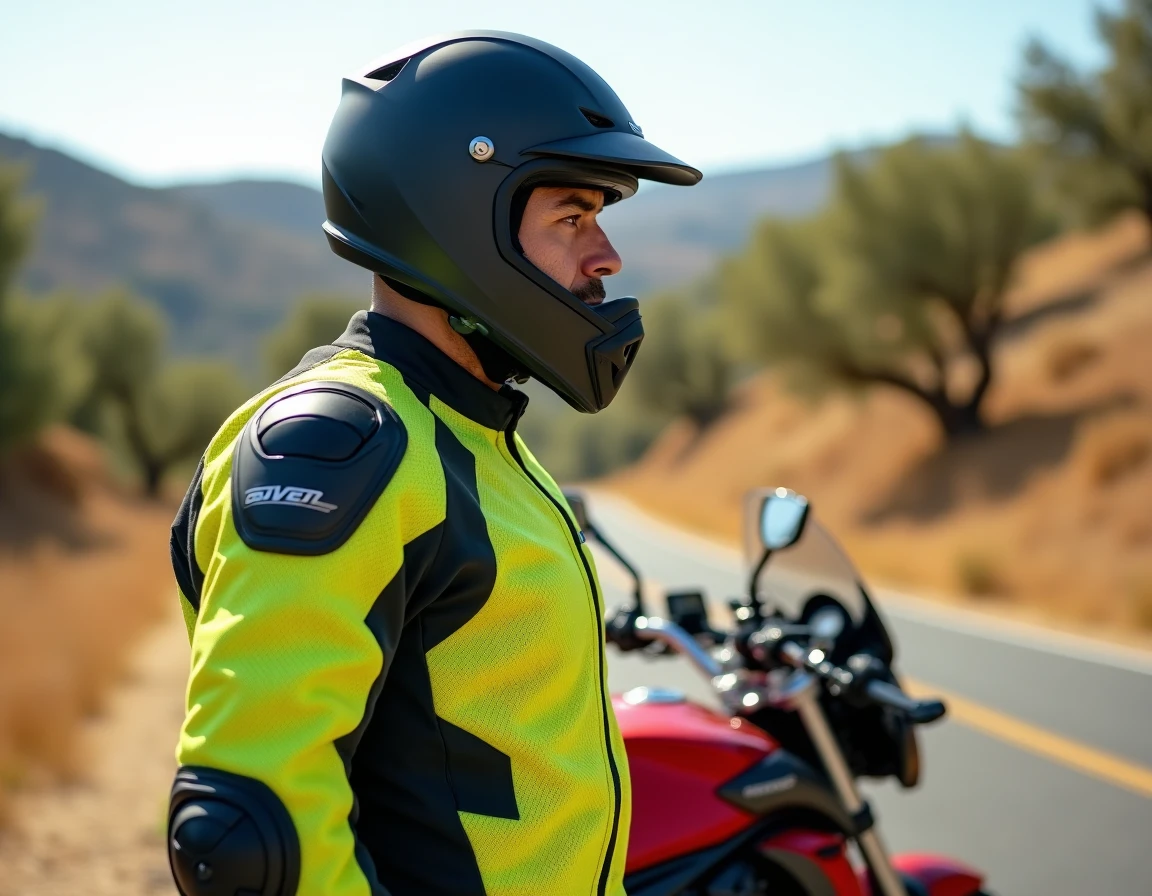
Crossing the Spanish border by motorcycle raises a specific question: what equipment is legally required by the DGT, and how do these obligations differ from French regulations? The discrepancies between the two countries concern concrete points, sometimes unknown to passing motorcyclists.
Helmet, gloves, documents: France-Spain motorcycle obligation comparison
The two countries share a common foundation, but the differences concern equipment that French motorcyclists sometimes consider optional on the other side of the Pyrenees.
| Equipment | France | Spain |
|---|---|---|
| Approved helmet (rider and passenger) | Mandatory | Mandatory |
| CE certified gloves | Mandatory | Mandatory (required by the DGT) |
| High visibility vest | Mandatory (to be worn in case of emergency stop) | Mandatory (to have on board) |
| Daytime running lights | Mandatory | Mandatory |
| Warning triangle | Mandatory | Replaced by the V16 beacon for Spanish vehicles |
| Green insurance card | Recommended | Required during checks |
A quick glance at this table suggests that the two frameworks are similar. However, it is in the practical application that the differences widen, particularly regarding gloves and insurance documents.
To delve deeper into the subject of gloves and applicable regulations, a detailed file addresses the mandatory motorcycle equipment in Spain with reference texts.
CE certified gloves in Spain: a real and enforced obligation
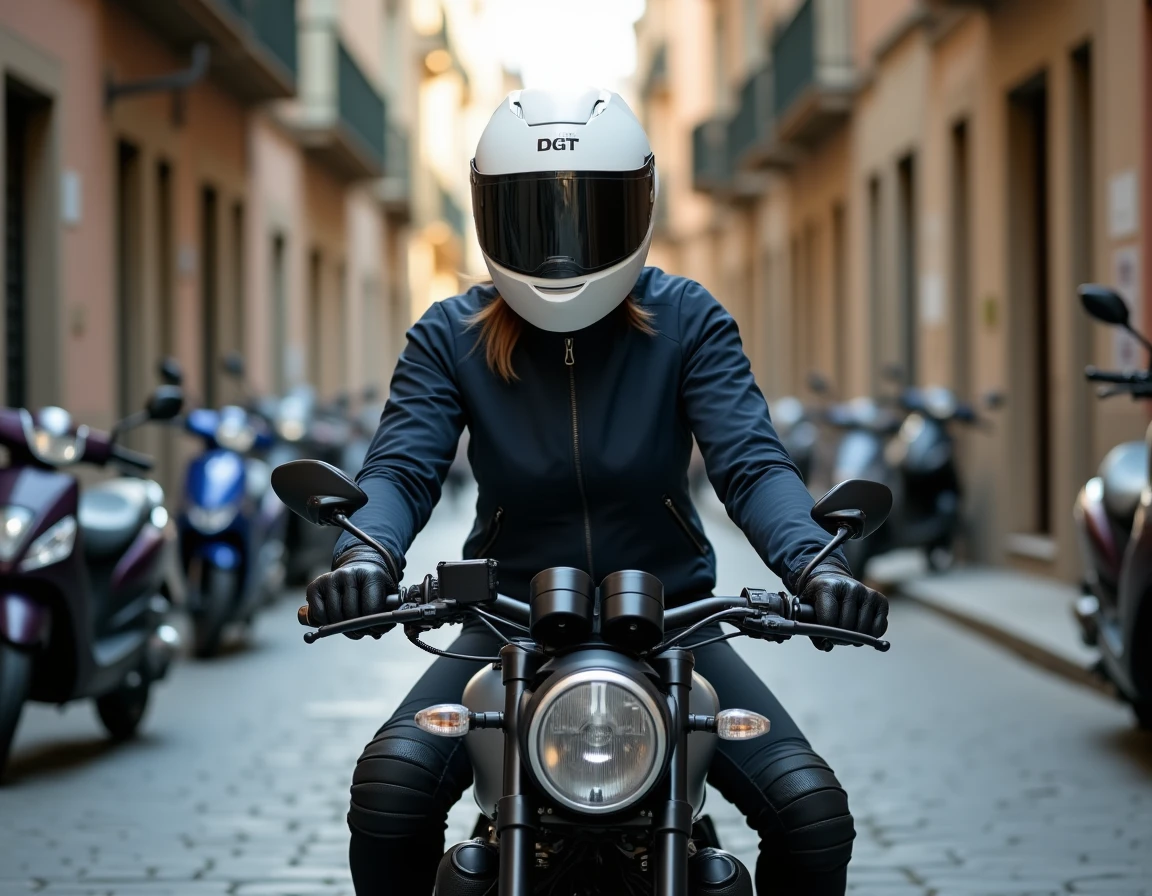
In France, the requirement to wear CE approved gloves has been well known for several years. What many motorcyclists do not realize is that the DGT also explicitly requires CE certified gloves for motorcycle riders and passengers in Spain.
Travel guides rarely mention this point. Motorcycle travel forums focus on helmets, overlooking gloves. Spanish road checks, however, do not overlook this.
The CE certification on gloves ensures a level of resistance to abrasion, cuts, and impact. Wearing city gloves or unmarked gloves exposes one to fines during an unexpected check, even for a foreign motorcyclist passing through.
What Spanish law enforcement checks
Road checks in Spain go beyond the equipment worn. Officers require the presentation of all documents: license, insurance, registration. For drivers whose license is not written in Spanish, it is increasingly common for an official translation to be requested during unexpected checks.
The green civil liability insurance card must accompany the vehicle documents. Its absence can lead to immediate immobilization, regardless of the actual validity of the insurance contract in the country of origin.
V16 beacon: the new obligation that does not apply to foreign motorcycles
Since January 1, 2026, vehicles registered in Spain must have a V16 beacon, a connected signaling light that replaces the warning triangle. The DGT deemed placing a triangle on the road too dangerous, especially on highways.
This beacon attaches to the vehicle’s roof via a magnet and emits a light signal visible from several hundred meters away. It also transmits its GPS position to the DGT to alert other users via road information signs.
Foreign motorcyclists: the triangle remains valid
The V16 beacon requirement does not apply to vehicles registered abroad. A French motorcyclist crossing Spain remains subject to the regulations of their country of registration. The warning triangle, if required by French road code, suffices.
This distinction is recent, and the Guardia Civil officers stationed on major roads are aware of it. It spares motorcycle tourists from having to purchase specific equipment for a short stay.
High visibility vest and body protection: what is required, what is recommended
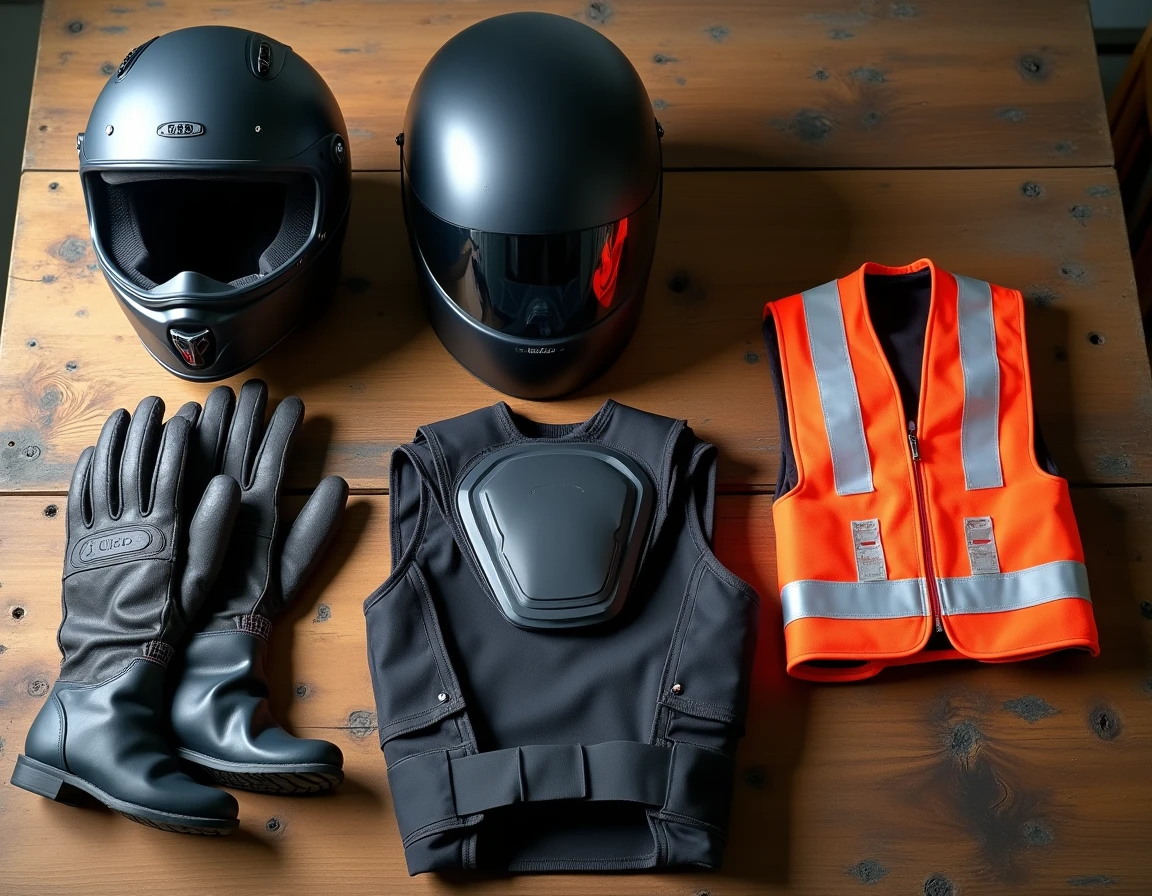
The high visibility vest must be on board the motorcycle in Spain. It is not mandatory to wear it while riding, but it must be put on as soon as the rider or passenger exits the vehicle on the roadside, in case of breakdown or emergency stop.
In practice, storing a compact vest in a top case or under the seat is sufficient to comply with the rule. The fine for not having a vest during an emergency stop is systematically enforced.
Protective clothing: no legal obligation, but an insurance issue
Neither France nor Spain mandates the wearing of certified protective clothing (jacket, pants, boots) for motorcycle riding. The regulations are limited to the helmet, gloves, and vest.
However, in the event of a bodily injury accident in Spain, insurers may examine the equipment worn at the time of the incident. The absence of back or joint protections, although legal, can influence the assessment of damages. This is not a regulatory obligation, but a factor to consider before a long trip.
- Approved ECE helmet and CE certified gloves: the only two pieces of equipment worn whose absence leads to immediate fines in Spain
- High visibility vest: mandatory on board, to be worn only outside the vehicle in an emergency situation
- Green insurance card and license (with translation if necessary): systematically checked during inspections
- V16 beacon: mandatory only for vehicles registered in Spain since January 2026
The discrepancies between Spanish regulations and French habits come down to a few details, but these details can trigger fines or immobilizations. Checking your gloves, green card, and vest before crossing the border remains the simplest action to ride without unpleasant surprises on Spanish roads.