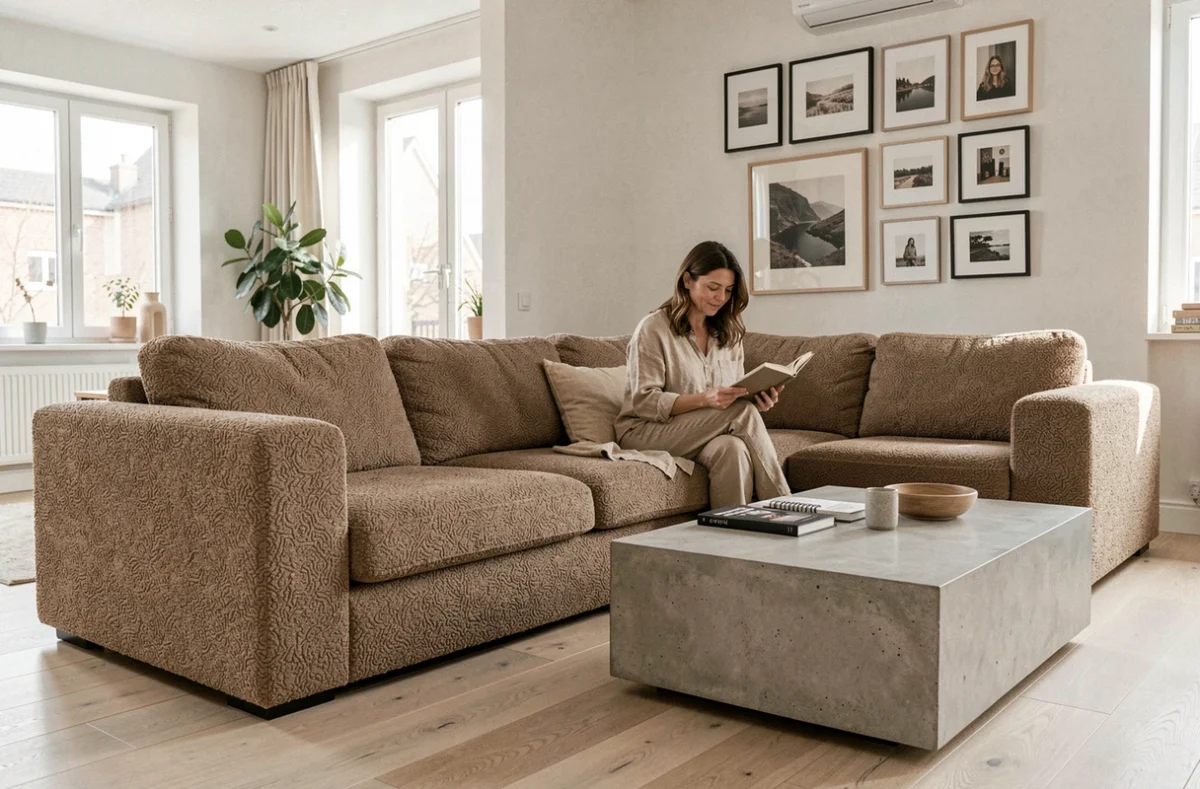
Choosing a sofa for your living room means agreeing to live with this piece of furniture for about a decade. The comfort of the seat, the durability of the fabric or leather, the sturdiness of the structure: everything is determined in the first few months, then confirmed (or deteriorated) over time.
Some brands focus on foam density, others on design or entry price. Understanding what truly distinguishes these manufacturers helps avoid disappointments.
EN 12520:2024 Standard and Sofa Safety: What Has Changed
Have you ever noticed technical labels sewn under the cushions of your sofa? These mentions refer to safety and durability standards. The European standard EN 12520:2024, published in France on February 5, 2025, outlines the safety, durability, and strength requirements for domestic seating.
In simple terms, a sofa sold in France must now meet more stringent load and wear tests. For a convertible sofa, the NF EN 1957 standard, which pertains to the sleeping function, adds to this foundation. This means that the conversion mechanism and the integrated mattress must also meet specific strength criteria.
Why does this point matter when choosing a brand? Because serious manufacturers display their certifications. A brand that mentions compliance with EN 12520 on its product sheets shows that it subjects its models to real tests. To identify recommended sofa brands, this type of transparency remains a reliable benchmark.
Foam Density and Suspension: Reading Between the Lines of Product Sheets
The density of the seat foam is the most reliable technical criterion for anticipating the longevity of a sofa. It is expressed in kilograms per cubic meter. The higher the value, the more the foam resists sagging over time.
High Resilience Foam vs. Polyether Foam
Polyether foam, common in entry-level sofas, offers decent comfort initially. After a few years of daily use, it loses its shape. High resilience foam (HR) is more expensive, but it retains its bounce much longer.
A sofa whose sheet does not specify the foam density is suspect. Brands that prioritize transparency indicate this information. It is a sign of trust, just like the mention of the EN 12520 standard.
The Role of Suspension
Under the cushions, the suspension absorbs movements and distributes weight. Two systems dominate the market:
- Crossed elastic straps, common in mid-range sofas. They provide good comfort, but their elasticity decreases over time if the quality of the straps is poor.
- Pocket springs or Nosag, found in higher-end sofas. Each spring works independently, improving support and durability of the seat.
- The combination of HR foam and pocket springs is considered the most durable duo for intensive family use.
When comparing two brands at the same price, check this point. A trendy fabric sofa with low-quality straps will age poorly, regardless of its design.
Repair Bonus and Spare Parts: An Underestimated Selection Criterion
Since autumn 2023, the Ecomaison Repair Bonus allows for a direct reduction in the repair bill of a sofa. This scheme covers upholstered seats and cushions. Specifically, a certified craftsman can intervene to replace sagging foam, a broken conversion mechanism, or a damaged armrest, with immediate financial assistance deducted.
This mechanism changes the way a brand is evaluated. The availability of spare parts (covers, cushions, legs, mechanisms) becomes as relevant a criterion as initial comfort. A brand that sells replacement covers and cushions individually extends the life of its sofas by several years.
Before purchasing, ask the manufacturer or retailer: are spare parts available? For how long after the purchase? A brand that guarantees access to parts for ten years makes a concrete commitment, not just marketing.

Second-Hand Sofas and Refurbishment: A Significant Market
According to estimates from IPEA reported by Xerfi, one in four pieces of furniture sold in France is now second-hand. The sofa is no exception. This figure reflects a structural change in the market, not a niche phenomenon.
Several retailers now offer take-back or refurbishment programs. The principle is simple: you return your old sofa, it is cleaned, repaired if necessary, and then resold at a reduced price. This circuit allows access to higher-quality brands for a more modest budget.
What to Check on a Second-Hand Sofa
Full-grain leather ages better than synthetic fabric. A well-made leather sofa can last through two households without issue. For fabric, check the condition of the seams and the firmness of the seat: if the foam is already compressed, the financial gain does not compensate for the loss of comfort.
Brands that facilitate refurbishment (removable structures, washable covers, replaceable foams) are better suited for second-hand use. This is an indirect indicator of manufacturing quality.
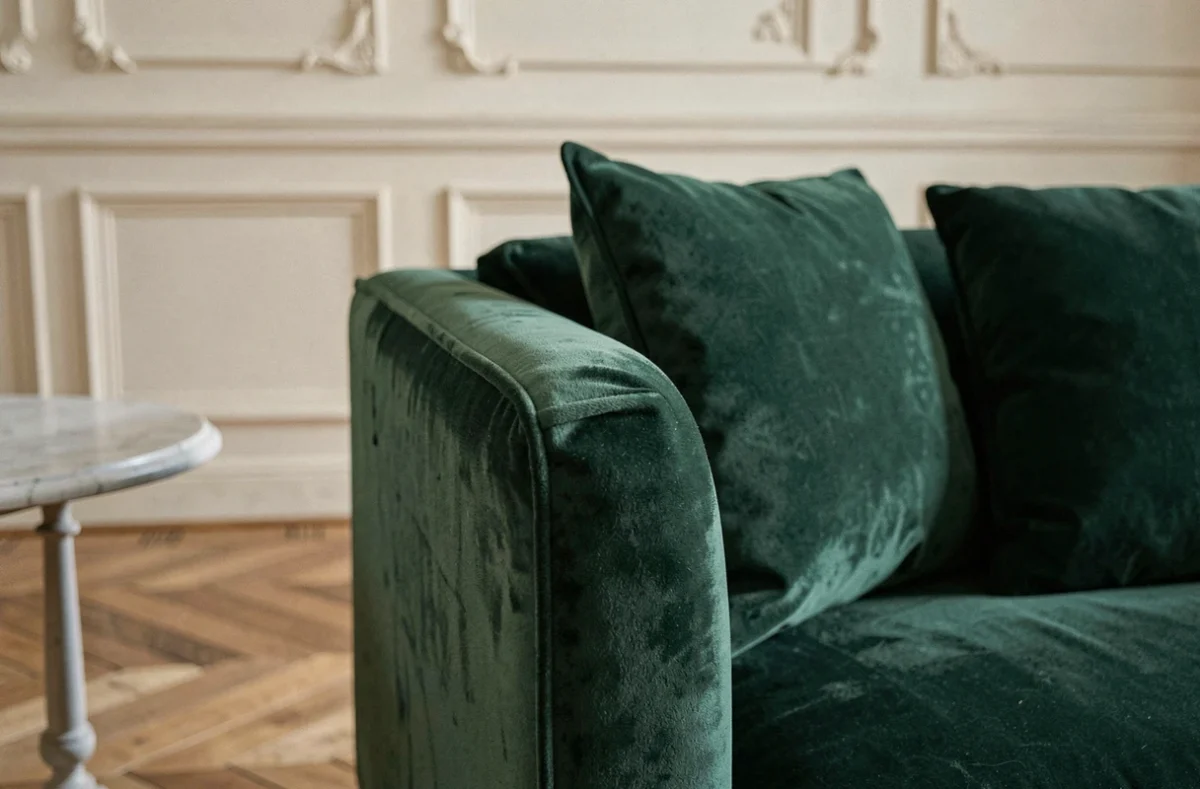
Fabric, Leather, or Velvet: Adapting the Upholstery to Your Living Room
The choice of upholstery depends as much on aesthetics as on daily use. A corduroy sofa adds a touch of character but does not withstand pet claws well. Full-grain leather develops a patina over time, while faux leather peels after a few years.
- High-tenacity polyester fabric resists friction well and is easy to clean. It is suitable for families with children.
- Grain leather withstands daily wear better than smooth leather, which marks more easily.
- Microfibers mimic the look of suede with significantly better stain resistance.
The upholstery also influences the perceived lifespan of the sofa. A fabric that pills after six months gives an impression of premature aging, even if the structure remains solid.
When comparing sofa brands for your living room, keep in mind that comfort is measured over time. The technical sheet reveals more than the catalog photo. Foam density, type of suspension, compliance with recent standards, access to spare parts: these four points effectively filter reliable manufacturers from mere assemblers.